Our role
Container trading runs on relationships and phone calls, which is exactly what makes pricing opaque. We contributed to the marketplace that puts inventory, counterparties and logistics in one place, so a transaction is a listing rather than a negotiation nobody else can see.
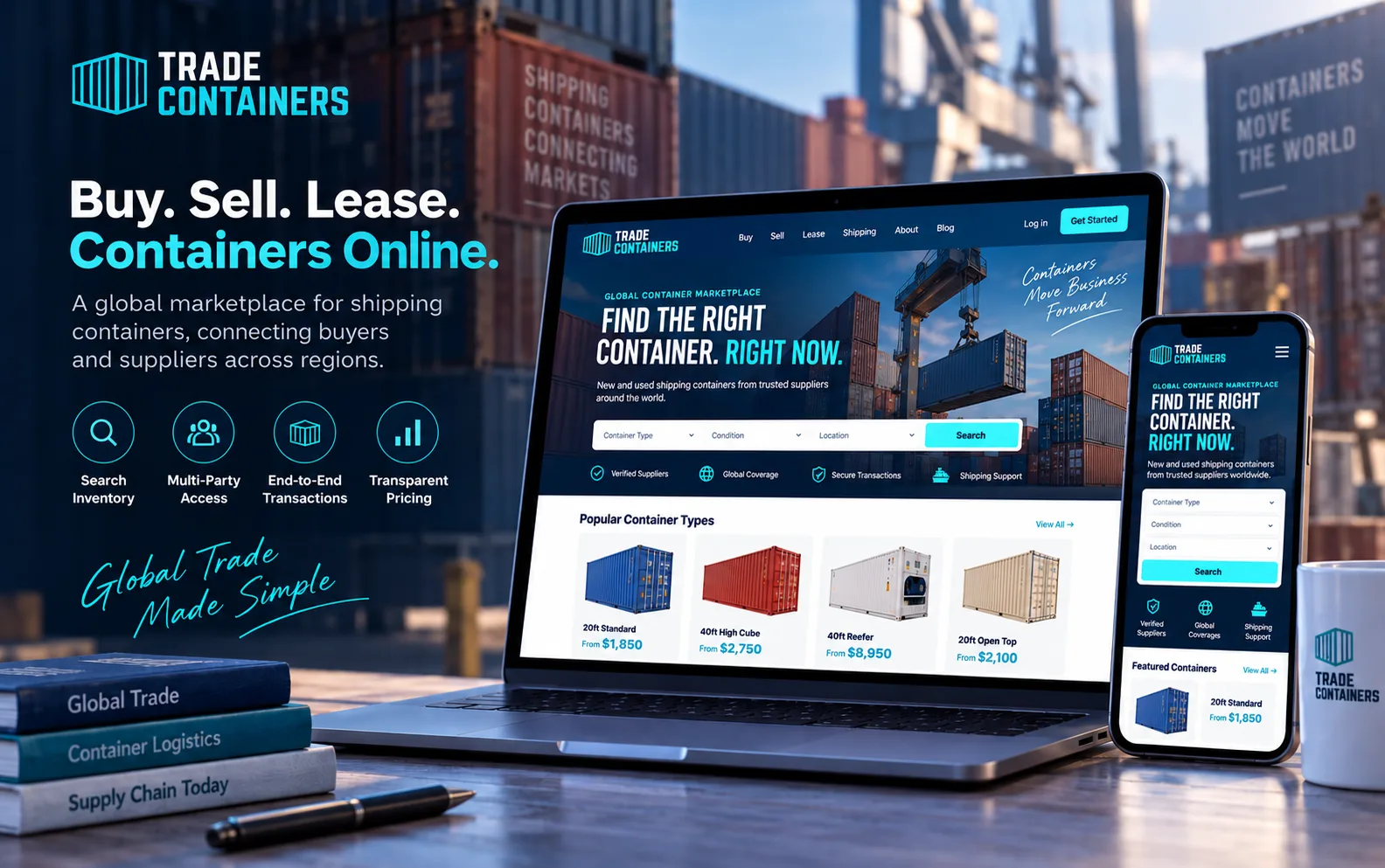
Shipping containers are a commodity traded like a bespoke good. Inventory sits in depots and ports across the world, availability changes daily, and price discovery happens over the phone between parties who already know each other. A buyer three timezones away has no way to see what is genuinely available near them or what it should cost. Trade Containers addresses that with a single transparent marketplace where traders, depots and ports list and transact directly, covering purchase, sale and lease rather than sale alone, because a large share of the market never transfers ownership at all. Sourcing and delivery are handled as part of the transaction instead of being left to the buyer, which is what turns a listing into a completed trade when the counterparty is on another continent.
An Opaque Market With Real Inventory
Price Discovery Happens on the Phone
Container trading is mediated by brokers and existing relationships, so the same box can carry very different prices depending on who is asking. Transparency was the product, not a feature of it.
Inventory Is Physical and Scattered
Stock sits in depots and ports worldwide and turns over constantly. A listing is only useful if it reflects what is actually available, where, and right now.
A Trade Is Not Done When the Deal Is
Agreeing a price leaves the harder half unsolved. Without sourcing and delivery, a cross-border transaction stalls exactly where a marketplace would otherwise claim victory.
How the Platform Solves It
One Marketplace, Three Participant Types
Traders, depots and ports transact on the same platform rather than through intermediaries, so supply that was previously only reachable by relationship becomes visible to the whole market.
Buy, Sell and Lease as Equals
Leasing is modelled as a first-class transaction type alongside purchase and sale, because a large share of container movement never changes ownership.
Sourcing and Delivery in Scope
Logistics are handled as part of the transaction rather than handed back to the buyer, which is what makes a deal between distant counterparties actually close.
Transparency as the Differentiator
Listed inventory with visible terms replaces broker-mediated quoting, so participants can judge a price against the market instead of against a single relationship.
What It Delivers
A Global Listing Marketplace
Container inventory published and discoverable across regions, with the counterparty reachable directly.
Multi-Party Access
Traders, depots and ports on one platform, each transacting in the role that suits them.
End-to-End Transactions
Purchase, sale and lease flows with sourcing and delivery coordinated as part of the deal.
A More Honest Price
Visible listings and terms, so cost-effectiveness is something a buyer can verify rather than take on trust.